Nap Steering Committee

EDEN NAP:

🔹 Networking & Collaboration – Connects experts in digital education across Europe.
🔹 Knowledge Sharing – Organizes webinars, discussions, and research activities.
🔹 Professional Development – Provides opportunities for learning, publishing, and participating in conferences.
🔹 Community Engagement – Supports innovation and best practices in online and blended learning.

EDEN NAP members actively contribute to educational research, policy discussions, and professional networking in digital education.

Fiona Aiken

Chair of the NAP Seering Committee

Dr Fiona Aiken is a Senior Lecturer, Staff tutor in the STEM faculty, School of Environment, Earth and Ecosystem Sciences with the Open University, UK. She is a home worker, living in Northern Ireland. Fiona started out as an Associate lecturer with the Open University in 1993 teaching general Science and Environmental Science modules at all levels. In her current role she manages a team of Associate Lecturers on environmental science modules and is the scholarship lead for her school.

Fiona’s current research interests are in educational research focussing on where improvements can be made to the student experience. One current project is looking at how students can be better supported in using the print resources which are sent to students who can’t access module resources online. A second project is researching the levels of eco-anxiety that students experience on environment modules and developing resources to help students build resilience and address
their eco-anxiety.

Fiona is a peer reviewer for two journals, Open Learning: The Journal of Open and Distance Learning and Higher Education: Skills and Work-based Learning. She has presented at the EDEN workshop in Barcelona in 2018, the EDEN workshop in Dubrovnik in 2022 and the EDEN conference in Dublin 2023. She also regularly attends the online EDEN NAP webinars.
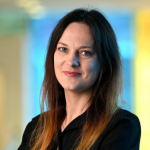

Giedré Tamoliūné

Deputy Chair of the NAP Steering Committee

Dr Giedrė Tamoliūnė is a lecturer and researcher at Education Academy, Vytautas Magnus University, involved in European and national scientific and applied projects that focus on different aspects of technology-enhanced teaching and learning, e.g., AI Pioneers, Transparent Assessment for Online Learning by Digitally Competent Professors,Digital micro-credentials in higher educationOER-Codex. Her research interests focus on technology-enhanced teaching and learning in higher education, lifelong learning, open education, and adult education. For the last several years, she has actively researched learning analytics for teaching and learning, micro-credentials, and digital assessment. Since 2015 Giedre has been an active member of EDEN and LieDM (Lithuanian Association of Distance and e-Learning) networks, participating in research events, conferences, and workshops, and presenting her research results.

As a senior specialist at the Innovative Study Institute, Education Academy, VMU, Giedrė creates and delivers teacher training courses for VMU teachers and educators from other formal and non-formal educational institutions. Finally, she works as an independent expert for project selection and report assessment in education for the Lithuanian Education Exchanges Support Foundation.

Carlo de Medio

Board member

Guy Cohen

Board member

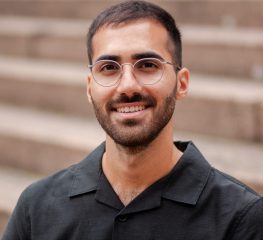
Guy Cohen is a PhD researcher in the Department of Education in Mathematics, Science, and Technology at the School of Education, Tel Aviv University. 
He is affiliated with the Advanced Learning and Technology Research Lab and the Science and Technology Education Center, where he leads and contributes to national and international research and development initiatives, including Horizon Europe and Erasmus+ projects.

He also serves as Chair Coordinator of the UNESCO Chair on Technology, Internationalization and Education (TIE), fostering international collaboration and innovation in education.

In addition, Guy is a lecturer in the Faculty of Instructional Technologies at the Holon Institute of Technology (HIT), where he teaches courses in research methods and research seminars, with a focus on learning technologies, digital learning, and quantitative and qualitative research methods.

His research focuses on learning technologies, with particular emphasis on artificial intelligence for learning and instruction, self-regulated learning, pedagogical digital competence, and the evaluation of higher education courses and professional development programs.

Marcelo Fabian Maina

Board member

Marcelo Fabián Maina is Professor of Educational Technology and Quality in Digital Learning and Director of the Master’s Degree in Education and ICT (e-learning) in the Department of Psychology and Education. He is a member of the Academic Committee of the Doctoral Programme in Education and ICT, and a member of the Edul@b research group at the UOC FuturEd Center. He is also a member of the EDEN NAP Steering Committee and the EADTU Task Force on the Personalisation of Education.

He holds a BA in Communication and Education from the Universidad Nacional de Entre Ríos, Argentina; an MSc in Communication Sciences from the Université de Montréal, Canada; and a PhD in the Knowledge and Information Society from Spain.

He is an active researcher involved in Horizon and Erasmus+ European projects across Europe, Asia, Africa, and Latin America. His work focuses on the digital transformation of educational institutions; skills- and competency-based learning and assessment; innovative and emerging digital pedagogies; hybrid modes of learning; e-portfolios; microcredentials; learning analytics; and artificial intelligence in education.

Mark P. McCormack

Board member

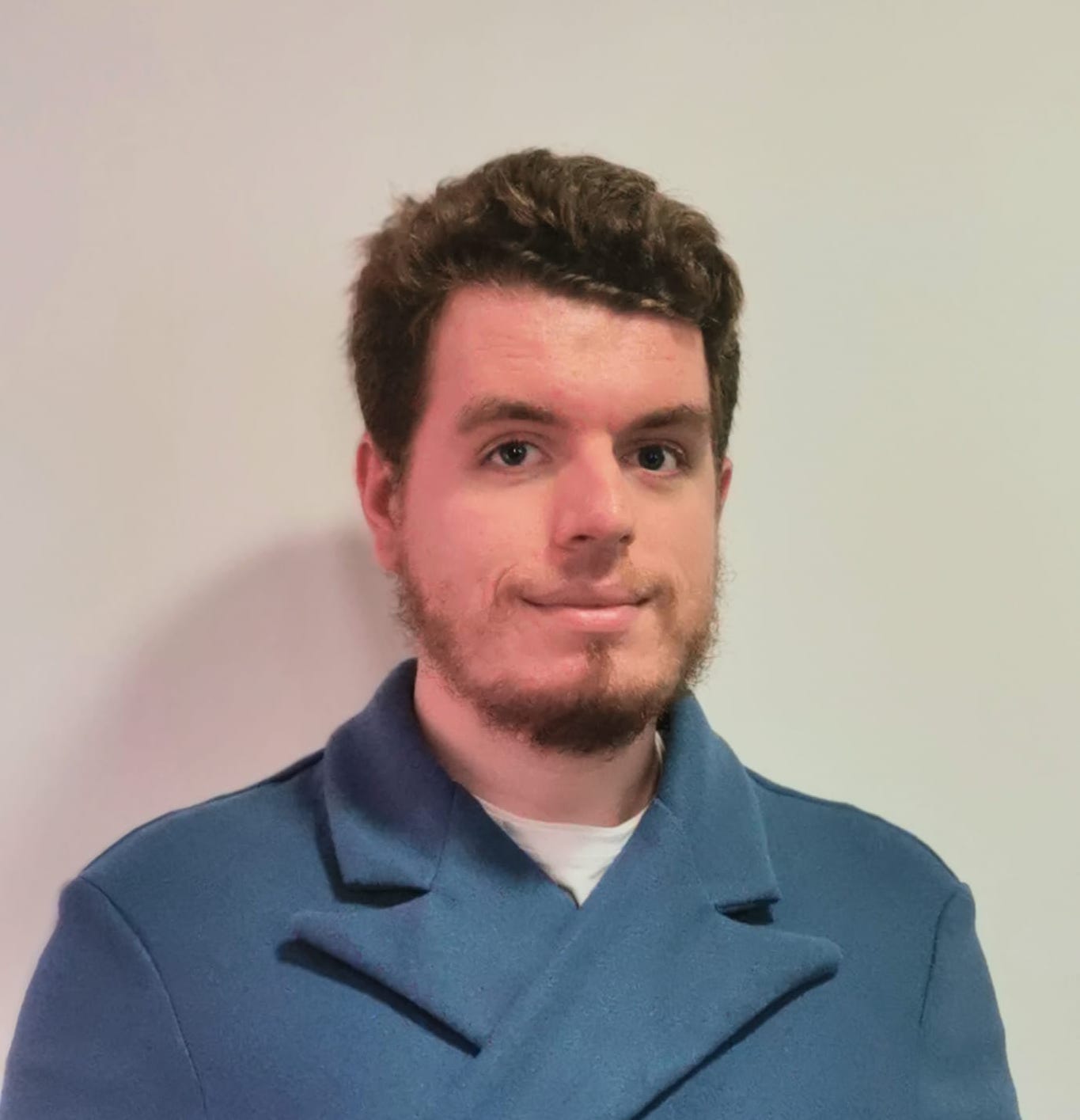
Mark P. McCormack is a Ph.D. Candidate of Maynooth University, Ireland. His research focuses on the collaborative use of Generative AI technologies in the Higher Education context, and how they may be leveraged for advancing students learning. With a background in Computer Science and Software Engineering, as well as experience in teaching Higher Education courses, he looks to develop pedagogies and practices to incorporate Generative AI into the classroom and guidelines to adapt our assessment practices accordingly. He is working toward his ultimate goal of academic work and aims to collaborate internationally with institutions on the aforementioned practices and findings. Mark has been actively involved in EDEN activities for the recent years  both in PhD Symposiums,  the conferences and  Research Workshops to collaborate and discuss futures in e-learning education together with peers.