

EDEN 2027 Annual Conference
July 4, 2027 @ 08:00 – 17:00
The main theme of the conference:
The future of human-centred digital education
How is teaching and learning evolving?
Education is undergoing a profound transformation as digital technologies reshape how institutions operate, how educators teach, and how learners engage with knowledge. Artificial intelligence, data‑driven innovation, extended reality, micro‑credentials, hybrid learning ecosystems and new organisational models are accelerating change at a pace that challenges established practices and assumptions. At the same time, questions of human purpose, agency, wellbeing, trust and equity are becoming increasingly central to debates about the future of learning.
EDEN Winterthur Zurich AC 2027 invites educators, researchers, leaders and policy makers to explore these and other topics of technologies in education. Key themes of the conference include:
Institutional transformation, capacity-building and professional learning
Institutional models for human-AI transformation
Visual and conceptual frameworks for educational change
Open education networks and inclusive digital futures to address human-AI challenges
Inclusion first
Capacity building to navigate human-AI collaboration
Pedagogical and relational dimensions
Relational pedagogies and learner-centred designs
Teacher and learner in an AI world
The human side of AI in Ed
The changing role of the teacher
Pedagogical responses to AI reconfigurations of education
Belonging and well-being to support the teaching and learning community
Ethics, trust, values and integrity
Trust in the digital age
Ethical decision-making in everyday practice
Maintaining academic integrity in the AI era
Student agency and engagement
Student partnership to support AI engagement
Building engagement and purpose with AI and beyond AI
Digital subjectivities and the transformation of identities in educational contexts
Research and assessment innovation
Digital assessment and micro-credentials
AI approaches for learning and teaching research
Reforming Assessment and Feedback for the AI era
More information coming soon.
Submissions should align with the conference theme and the topics related to the scope of the conference. All paper types will be double-blind peer-reviewed by members of the Scientific Committee. Find all the submission types and guidelines below.
There are four different paper submission categories: Full paper, Concise paper, Poster and Demo Lab.
Full paper – A Full Paper allows you to present a slightly longer account of your work. This presentation format is better suited to sharing the findings of case studies, research projects or more mature innovations related to the conference theme/topics which allow you to provide a richer analysis, description and interpretation of the work. Importantly, a Full Paper should identify the main implications or discussion points which will be of wider interest to conference participants. The paper length is 2500 to 3500 words, including the abstract, keywords, tables, figures and references.
Full papers may be two types:
– An experience paper (based on the project or other innovative practice);
– A research paper with a clear research methodology and research results.
Only research based Full papers will be considered for the Best Research Paper Award.
If your Full Paper is accepted, the presentation time is a maximum of 15 minutes and 5 minutes for questions (i.e., 20 minutes in total).
Concise paper – a Concise Paper allows you to present a shorter summary of your work. This presentation format is ideally suited to small projects, new and emerging areas and works in progress. The format allows you to showcase and/or offer a brief snapshot of your work, with a specific focus on the main findings or discussion points that should be of wider interest to conference participants. The total length of a Concise Paper should be 200-500 words, including the abstract, keywords and references. If your Concise Paper is accepted, the presentation time is 10 minutes with 5 minutes for questions (i.e., 15 minutes in total).
Poster – A Poster allows you to present your work on a poster board which will be on display throughout the conference. This format is ideal for showcasing and/or offering a brief snapshot of your work to generate more interest and follow-up conversations with conference participants. The author(s) need to bring the printed poster to the conference and attach it to the poster board when they arrive at the conference venue. There will not be a dedicated poster session in the conference programme, but we encourage presenters to be available to discuss their work during the refreshment breaks. Poster submissions are between 250 and 500 words, including the abstract, keywords and references. Authors of posters accepted for presentation will be required to prepare and bring a printed Portrait poster of a maximum of A0 formate (84,1 cm × 118,9 cm). Please note, that bigger formats will not be accepted!
Note: Posters’ authors are not required to make poster presentations
Innovation Demo Lab is a new conference submission type that provides an interactive space for researchers, educators, practitioners, and innovators to share their digitally-enabled teaching and learning innovations, tools, and applications in a collaborative and non-commercial environment. This new and dynamic track is designed to showcase hands-on demonstrations of innovative practices, prototypes, and emerging technologies in education. This track emphasises education led experimentation, dialogue, and knowledge exchange – distinct from commercial sponsorship or exhibition. Submissions are welcome that demonstrate research-based or practice-oriented innovations in technology-enhanced learning, including (but not limited to):
- Artificial Intelligence applications in teaching and learning
- Robotics and embodied learning environments
- Virtual, augmented, and extended reality for education
- Serious games and simulation-based learning
- Learning analytics, adaptive learning, and personalization
- Experimental prototypes, pilot projects, and practice-driven innovations.
Submissions will be peer reviewed by the Conference committee for relevance, originality, and potential to foster meaningful dialogue. Accepted contributions will be included in the EDEN Winterthur Zurich AC 2027 programme, EDEN proceedings and presented in interactive demo sessions, enabling participants to engage directly with the innovation. Each 200-500 word submission must include a link to a 3–5 minute video openly hosted on YouTube. Video files should not be uploaded directly to the submission system. The video should clearly demonstrate the innovation in action, including a short introduction (what the innovation is, who it is for, why it matters), a screen capture or live demonstration of the system, tool, or practice, a scenario or use case showing how learners or educators engage with it. Include audio narration or English captions for accessibility.
Innovation Demo Lab presentation time at the conference is 5-10 min and 10 min for interaction and application with the participants (i.e., 20 minutes in total).
(Submission Requirements – what will be included in the template:
Submission (200 – 500 words) including:
- Title and authors (with affiliations)
- Purpose and educational significance of the innovation
- Description of the system, tool, or practice to be demonstrated
- Evidence base or research background supporting the innovation
- Interaction format: how participants will experience or engage with the demo
- Technical requirements for demonstration (if any)
Action Lab– upon invitation only. Action Labs allow participants to debate, discuss and engage in lively professional dialogue on high-profile topics or issues relevant to the conference theme. Each Action lab will be structured around a handful of big questions for participants to debate.
Proceedings
As all submission types will be subject to a peer review process. Full Papers will be double-blind peer-reviewed by members of the Scientific Committee consisting of international experts working in the field. Other paper types will be peer-reviewed by the conference co-chairs and members of the Programme Committee. Authors should leave their names and affiliations blank when uploading submission documents, and take care to avoid details that could be used to identify contributing authors. These include institution information, specific funding information and clear self-citations. Authors of selected top-quality Full Papers will be invited to submit an extended manuscript for publication as a scientific journal paper in EURODL.
Full papers will be published as proceedings special issue with unique DOIs. The formatting of all types of submissions should follow the guidelines and templates provided. References should follow the APA (7th) style. All other papers will be published in EDEN’s conference proceedings (ISSN: 2707-2819).
Acceptance Criteria
Decisions on acceptance will be based on the following criteria:
- Originality
- Innovation
- Quality of scholarship
- Contribution to new knowledge
- Alignment to the conference theme
Contributions outside of the main conference themes will be considered if they bring new knowledge and benefit delegates. The Conference co-chairs and the Scientific Committee will make the final decision as to the accepted submission format to ensure quality and the coherence of the conference theme. Note that some Full Paper submissions may be accepted following revisions as Concise Papers after the review process. All Full Papers will be considered for the prestigious EDEN Best Research Paper Award, which will be presented at the Gala Dinner.
EDEN Best Research Paper Award in cooperation with The UNESCO Chair in Education and Technology for Social Change
All accepted Full Research papers enter competition for EDEN Best Research Paper Award (BRPA). BRPA competition is based on evaluation results on submission of Full Papers in research category presented to the Annual Conference that follow five standard evaluation criteria:
- The paper deals with a research question.
- Rigorous examination/research methods are applied.
- Findings, results and outcomes are convincingly presented and critically examined.
- Conclusions are thoroughly discussed (including applicability, transferability, and further research.
- Literature is reviewed against state of the art.
The composition of the honourable jury for the EDEN Best Research Paper Award is composed in cooperation with The UNESCO Chair in Education and Technology for Social Change will be appointed soon.
The decision on the winner of the EDEN Best Research Paper Award will be announced on July 5th at the EDEN Annual Conference Gala Dinner in Winterthur-Zurich, Switzerland.
EDEN Annual Conference PhD Symposium held in previous years in Barcelona (2018), Bruges (2019), Dublin (2019), Timisoara (2020), Lisbon (2020), Madrid (2021), Tallinn (2022), Dublin (2023), Graz (2024), Bologna (2025) and Porto (2026) has been designed to foster the exchange of experiences and knowledge among doctoral students conducting research in the area of technology-enhanced online, digital, open and distance learning οr learning with technologies, and provides a valuable forum for the advancement of doctoral research. EDEN supports networking of research community in digital education topics and therefore we encourage participation of not only PhD students but also their supervisors.
The Symposium is open to all doctoral students, both PhD and EdDs, and will be led by the host university with contributions from EDEN Management Board members and a panel of international experts. PhD symposium is organized in the main venue on Sunday morning, July 4, 2027.
Doctoral candidates are invited to submit a brief Synopsis Paper of their work in progress or proposed research topic, as there will be an opportunity to discuss your research during the Symposium. This Synopsis Paper should be a maximum of 500 words, including references. Participation in the Symposium is not dependent on the submission of a paper to the main conference.
Key dates
| Call for papers | December 1, 2026 |
| Registration opens | January 18, 2027 |
| Paper submission opens | January 18, 2027 |
| Deadline for paper submissions | April 5, 2027 |
| Notification of paper admission | April 23, 2027 |
| Early bird registration deadline | April 30, 2027 |
| Authors’ registration and payment deadline (at least 1 author of the paper) | June 1, 2027 |
| Final Camera-Ready Manuscript for Full papers | June 1, 2027 |
| Delegates’ registration closes by Invoice payment (stays open by card) | June 1, 2027 |
| Publishing of the Program | June 14, 2027 |
| Delegates’ Registration closes by card payment as well | June 14, 2027 |
| PhD Symposium | July 4, 2027 |
| Gala dinner | July 5, 2027 |
| Conference dates | July 4-6, 2027 |
| Proceedings | September – October 2027 |
More information coming soon.
Conference Scientific Committee
Co-Chairs
Wim E.A. Van Petegem, EDEN DLE President; KU Leuven, Belgium
Claud Muller Werder, ZHAW School of Management and Law, Switzerland
Members
Alfredo Soeiro, EDEN DLE Management Board; University of Porto, Portugal
Albert Sangra, EDEN DLE Vice-president for Strategic Thinking and Networking; UOC-FuturEd Research Centre, Universitat Oberta de Catalunya, Spain
Antonella Poce, EDEN DLE Chair of PhD Community; University of Modena and Reggio Emilia, Italy
Denise Whitelock, EDEN DLE Vice-President for Research; Open University, UK
Elena Trepule, EDEN DLE Secretary General; Vytautas Magnus University, Lithuania
Estela Dauksiene, EDEN DLE Management Board; Vytautas Magnus University, Lithuania
Janika Leoste, EDEN DLE Management Board; Tallinn University, Estonia
Josep M. Duart, EDEN DLE Management Board; Universitat Oberta de Catalunya, Spain
Mart Laanpere, EDEN DLE Management Board; Tallinn University, Estonia
Ronan Bree, EDEN DLE Management Board; Dundalk Institute of Technology, Ireland
Vlad Mihăescu, EDEN DLE Vice-President for Membership and Communication; Politehnica University Timisoara, Romania
More information coming soon.
The EDEN 2027 Annual Conference (4–6 July 2027) will be hosted by ZHAW Zurich University of Applied Sciences in Winterthur, Switzerland, just a short train journey from Zurich.
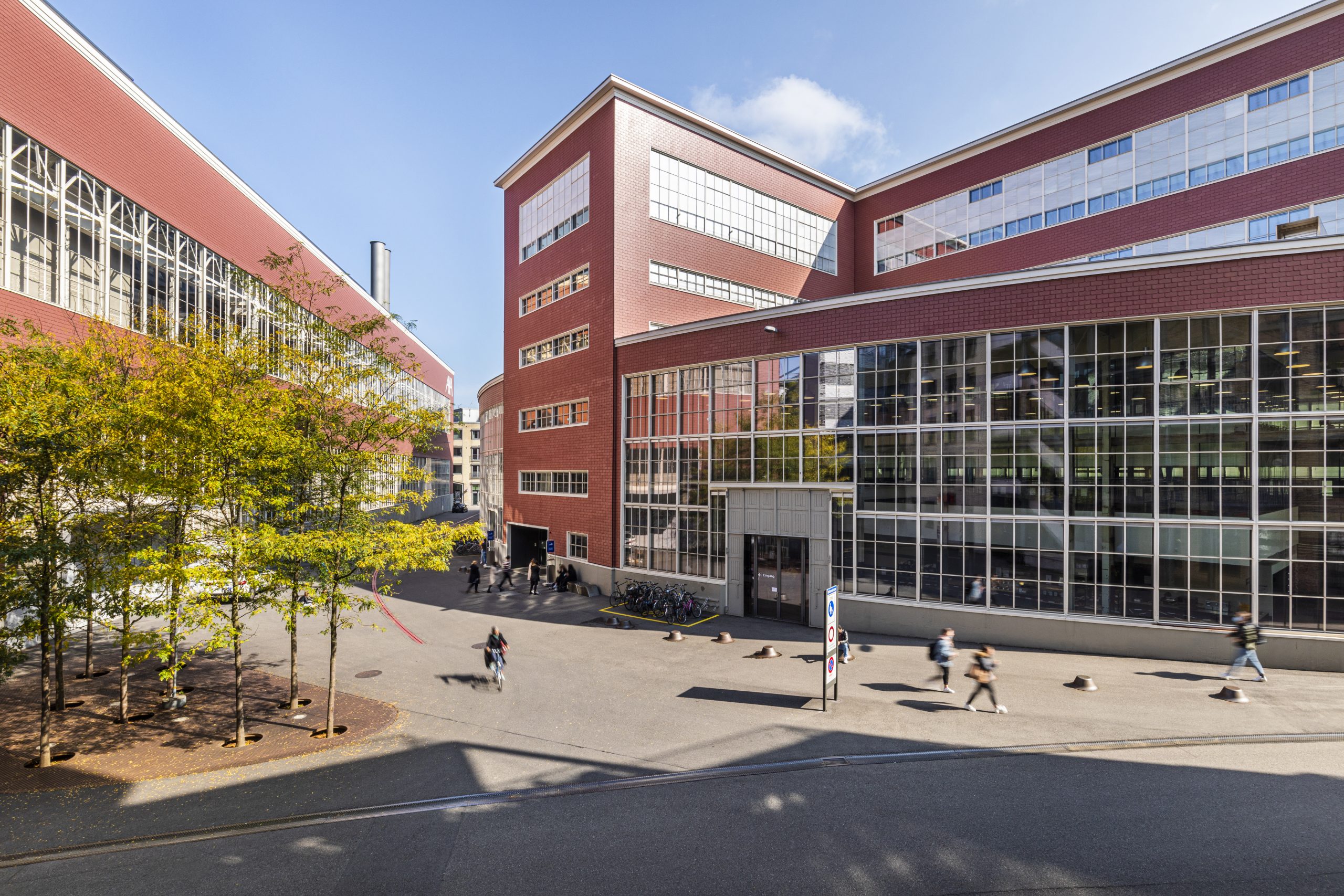
The main conference venue will be located in the Roter Turm (Red Tower), a distinctive landmark in the heart of Winterthur, within approximately five minutes’ walking distance of Winterthur railway station.
Conference venue address:
ZHAW Zurich University of Applied Sciences
Roter Turm (Building ST)
Theaterstrasse 17
8400 Winterthur, Switzerland


About ZHAW
ZHAW is one of Switzerland’s leading universities of applied sciences, recognised for its practice-oriented education, applied research and close collaboration with industry and society. The university brings together around 15,000 students, over 11,000 continuing education participants and approximately 3,700 employees across its campuses in Winterthur, Zurich and Wädenswil.
Its eight Schools cover a broad spectrum of disciplines, including Applied Linguistics, Applied Psychology, Architecture, Design and Civil Engineering, Engineering, Health Sciences, Life Sciences and Facility Management, Management and Law, and Social Work. Together, they offer a wide range of Bachelor’s and Master’s degree programmes, combining academic excellence with practical relevance and innovation.
Of particular relevance to the EDEN community is ZHAW’s Center for Innovative Teaching and Learning (ZID), which has been researching and advancing digital learning for more than 20 years. The Centre brings extensive expertise in digital education, blended learning and evidence-based learning design, supported by international research and innovative educational technologies.
Discover Winterthur – A City of Culture, Creativity and Innovation
Once known as a city of gardens and industry, Winterthur has evolved into a vibrant centre of culture, education and innovation while retaining its distinctive industrial heritage. Former 19th-century factory buildings now house creative spaces, cultural venues, restaurants and contemporary workplaces, giving the city its unique character.
Winterthur is particularly charming for its picturesque, typically Swiss Old Town, with historic buildings, pedestrian streets, inviting cafés and restaurants. The city is also known for its museums, art collections and beautiful green spaces. Winterthur’s compact and walkable city centre makes it especially convenient for conference participants. The conference venue, railway station, historic Old Town and most centrally located hotels are all within easy walking distance, allowing visitors to explore the city comfortably on foot.
Combining the charm of a traditional Swiss town with a lively cultural atmosphere and excellent international accessibility, Winterthur offers an ideal setting for professional networking, international exchange and inspiring conversations about the future of digital education.
Travel and Accommodation
Winterthur is exceptionally well connected by public transport. Frequent direct trains connect the city with Zurich city centre in about 15 minutes (approximately €15 one way) and Zurich Airport in approximately 15 minutes (approximately €10 one way). Winterthur railway station also offers convenient national and international rail connections. The conference venue is only a five-minute walk from the Winterthur railway station, and a range of hotels, restaurants and local amenities are located within easy walking distance.
Getting to Winterthur
Winterthur is conveniently located in northeastern Switzerland, with excellent rail connections to Zurich, Zurich Airport and destinations throughout the country.
By air
Zurich Airport (ZRH) is the most convenient international airport for the conference. It offers extensive European and intercontinental flight connections. Frequent direct trains connect the airport with Winterthur in approximately 15 minutes.
Travelling Around Switzerland
Switzerland has an extensive, reliable and well-integrated public transport network, making it easy to explore the country without renting a car. Trains, buses, trams, mountain railways and lake boats connect cities, towns and many of Switzerland’s most scenic destinations. We strongly recommend downloading the SBB Mobile app, the official application of Swiss Federal Railways.
Make the Most of Your Visit to Switzerland
Travelling to Switzerland for EDEN 2027? Why not consider extending your stay by a day or two? For international participants, especially those travelling from overseas, the conference offers an excellent opportunity to discover some of Switzerland’s spectacular natural landscapes, historic towns and world-famous mountains. Winterthur’s central location and excellent public transport connections make several memorable excursions possible without a car. EDEN is not organizing sightseeing but here are two suggestions for independent exploration before or after the conference
Rhine Falls and Schloss Laufen – Europe’s Largest Waterfall
Suggested duration: 3-4 hours/half a day
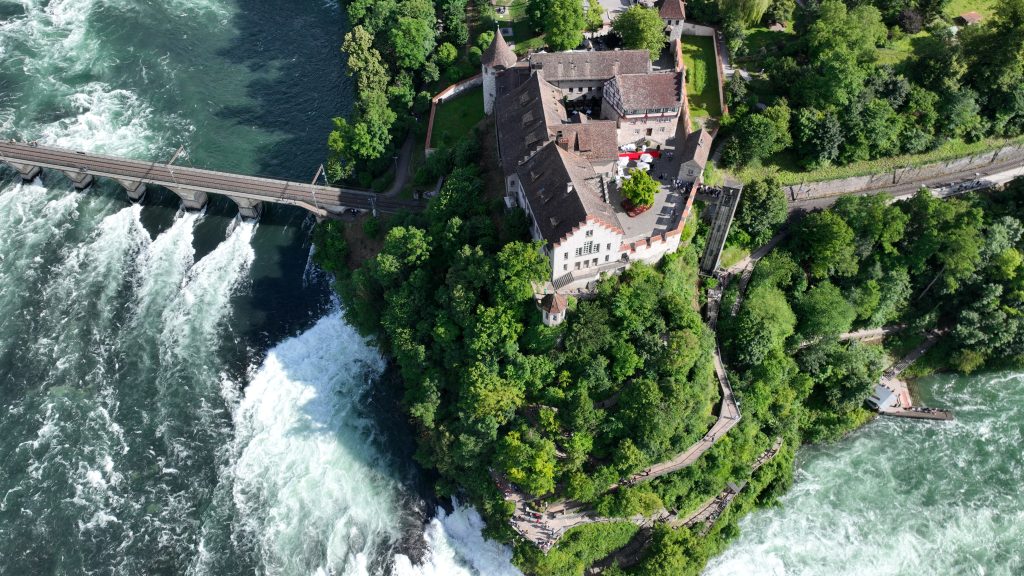
Just a short train journey from Winterthur, the Rhine Falls (Rheinfall) are among Switzerland’s most impressive natural attractions and the largest waterfall in Europe by water volume. Visitors can admire the powerful waterfall from several viewpoints, walk along the riverside paths or take an optional boat excursion to experience the falls from the water. Overlooking the waterfall is the historic Schloss Laufen, a medieval castle with more than 1,000 years of history. Its viewing platforms offer spectacular perspectives of the rushing water, while the castle’s exhibition introduces visitors to the history of this remarkable site.
How to get there: Take a train from Winterthur to Schloss Laufen am Rheinfall station. The castle and waterfall viewing areas are just a short walk away.
Day trip: Mount Rigi, Lake Lucerne and Lucerne – A Swiss Alpine Experience
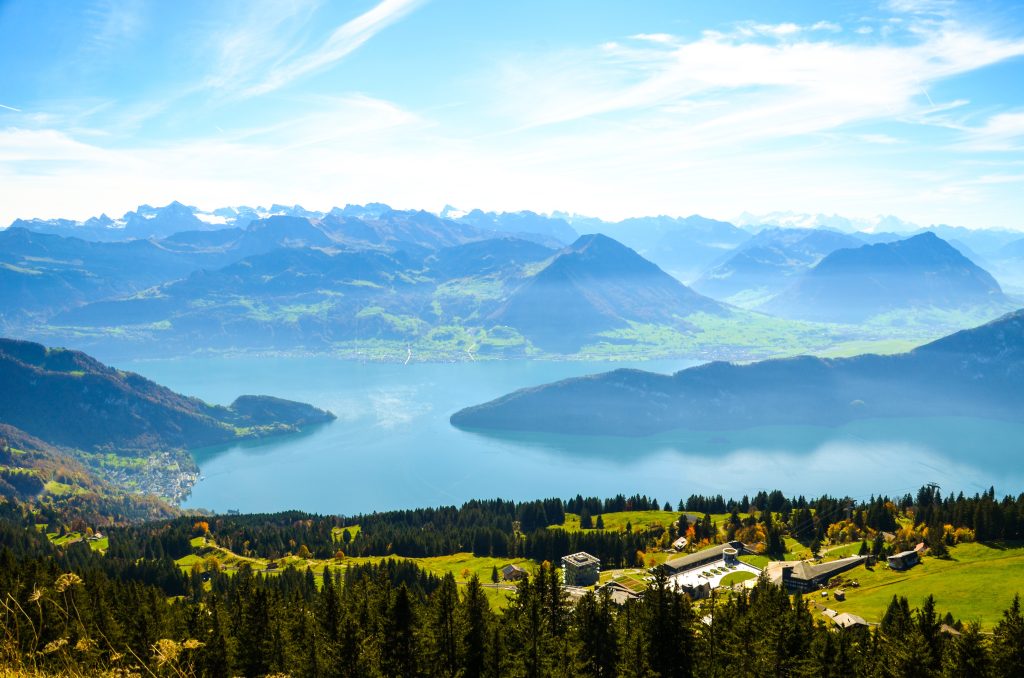
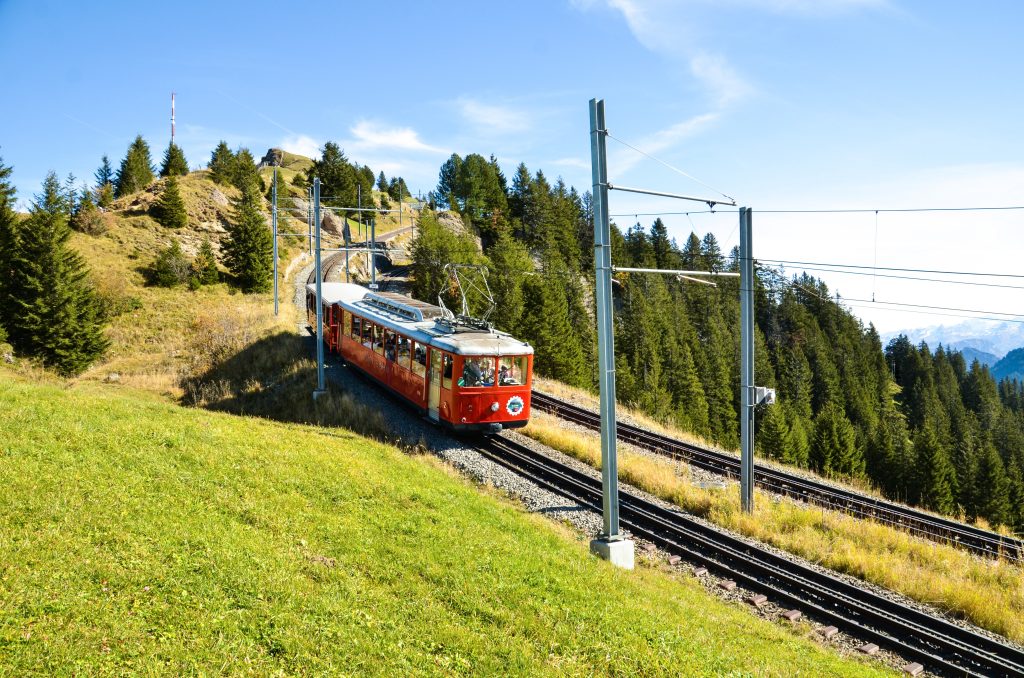
For those who can extend their stay by a full day, we particularly recommend an excursion to Mount Rigi, often called the Queen of the Mountains.
This journey combines some of Switzerland’s most iconic experiences: spectacular Alpine panoramas, a historic cogwheel railway, beautiful mountain walking trails, alpine cow and sheep bell sounds, a scenic boat trip across Lake Lucerne and a visit to one of Switzerland’s most charming cities.
A suggested one-day itinerary:
- Winterthur → Arth-Goldau: Travel by train to Arth-Goldau, a gateway to Mount Rigi.
- Arth-Goldau → Rigi Kulm: Board the traditional cogwheel mountain railway and enjoy the scenic ascent to Rigi Kulm, the summit of Mount Rigi (1,797 m). On a clear day, the panoramic views stretch across the Swiss Alps and surrounding lakes.
- Explore Mount Rigi: Enjoy the viewpoints, mountain cafés and walking trails. Those who enjoy hiking may choose a scenic walk down towards Rigi Kaltbad train station, while others can continue comfortably down by mountain railway.
- Rigi → Vitznau: Descend by cogwheel railway to the lakeside village of Vitznau. If you hike down to train station Rigi Kaltbad take the train from there to Vitznau.
- Vitznau → Lucerne: Board a passenger boat beside the train station for a beautiful cruise across Lake Lucerne, surrounded by mountains and picturesque lakeside villages.
- Explore Lucerne: Spend some time discovering Lucerne’s historic Old Town, the famous Chapel Bridge (Kapellbrücke) and its attractive waterfront before returning to Winterthur by train.
This is a wonderful way to experience Switzerland’s mountain and lake scenery in a single day, with opportunities for both gentle sightseeing and more active walking.


Travel tip – SBB Saver Day Pass
For this type of excursion, consider purchasing an SBB Saver Day Pass, which provides unlimited travel on much of Switzerland’s public transport network for one selected day. The pass is particularly attractive for longer journeys combining several modes of transport. It is valid on the regular Mount Rigi cogwheel railways and scheduled boats on Lake Lucerne, making it a convenient option for the suggested itinerary.
Saver Day Passes can be purchased through the SBB website or SBB Mobile app, generally at lower prices when booked well in advance. Prices vary according to availability. We recommend checking the train, mountain railway, boat timetables, and weather conditions before travelling.
Important Information
These travel ideas are provided for inspiration and general information only. EDEN Digital Learning Europe does not organise, coordinate or provide bookings for excursions or additional travel activities. All suggested trips are entirely optional and should be planned and undertaken independently by participants. Travel schedules, ticket prices, opening hours and weather conditions may change. Participants are encouraged to consult the official transport and tourism websites for up-to-date information before making arrangements.
We hope your visit to EDEN 2027 will be an opportunity not only for inspiring professional exchange, but also to discover some of the remarkable landscapes and cultural experiences Switzerland has to offer.
More information coming soon.