

Highlights of EDEN Porto AC 2026
The EDEN Annual Conference 2026, hosted at the University of Porto, Portugal, brought together the global digital education community under the theme “Beyond Technology: Human–AI Collaboration for Learning and Teaching.”
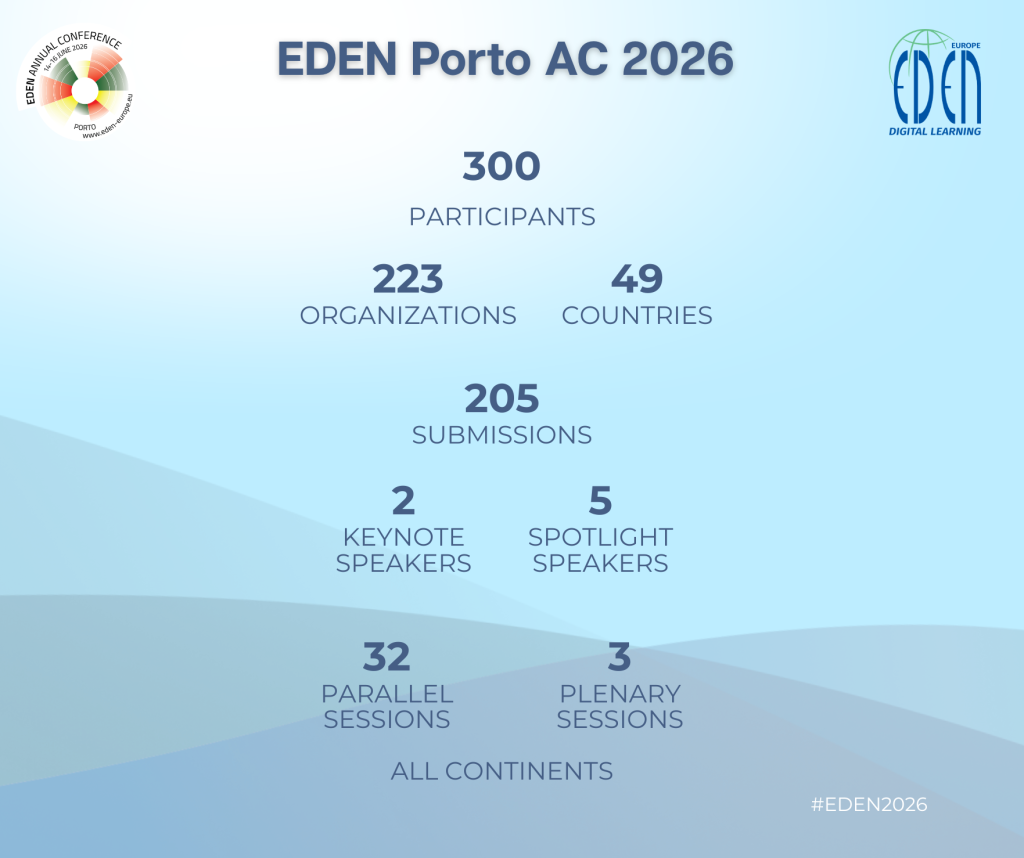
The conference demonstrated once again the truly international character of the EDEN community, welcoming 300 participants from 223 organisations across 49 countries, representing every continent — from Canada and Brazil to South Africa, Nepal, New Zealand, and China.
The 2026 edition received an impressive 205 submissions, reflecting the growing global interest in digital education research, innovation, and practice. The conference also welcomed representatives from key partner networks, including Contact North and ICDE, strengthening collaboration across the international education ecosystem.
The programme featured a rich variety of activities, including three plenary sessions, two keynote speeches, five spotlight presentations, ten parallel sessions with paper presentations and demo sessions, the Grand EDEN Debate, and numerous opportunities for networking and research exchange.
EDEN DLE Management Board Meeting at the University of Porto
On Saturday, following the opening of EDEN Porto AC 2026, the EDEN Digital Learning Europe (DLE) Management Board gathered in person at the University of Porto, Portugal.
The meeting provided an opportunity for Board members to reflect on ongoing activities, discuss future strategic directions, and strengthen collaboration within the EDEN DLE community. It was a valuable moment for shared reflection, strategic discussions, and collective work towards shaping the future of digital learning.
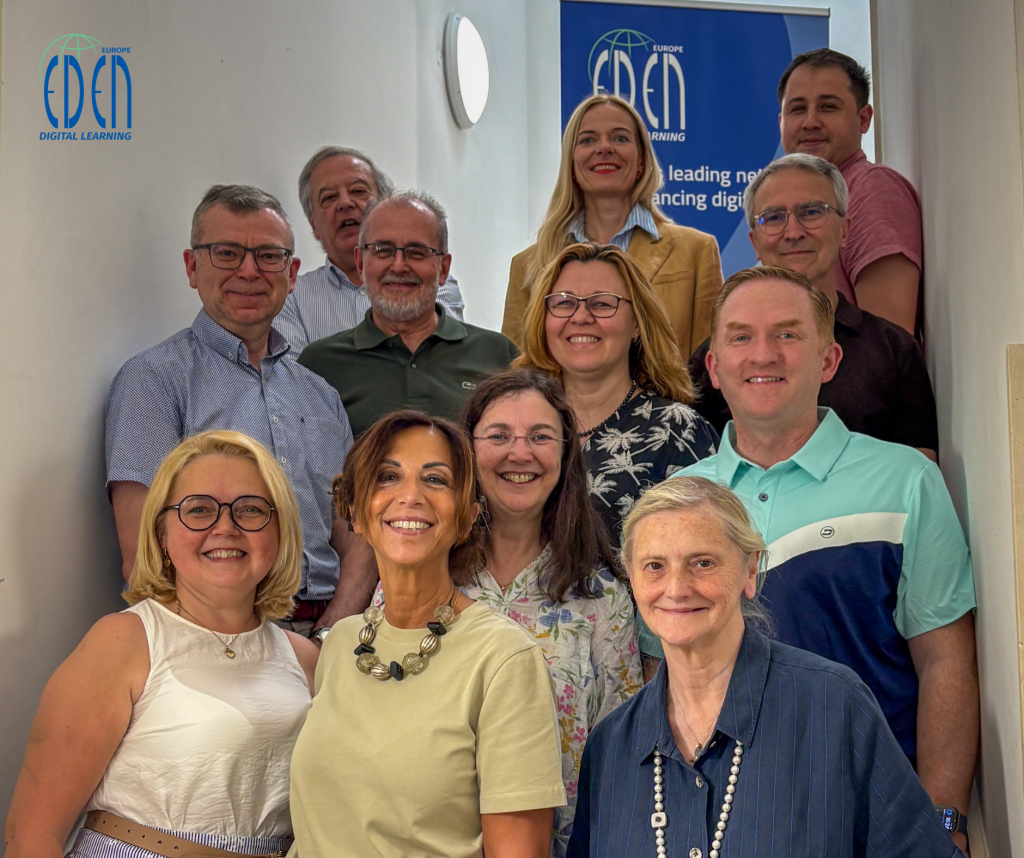
(EDEN Management Board 2026)
PhD Symposium: Supporting the Next Generation of Digital Education Researchers
The first day of the conference opened with the EDEN Porto AC 2026 PhD Symposium, bringing together doctoral researchers, supervisors, and international experts for a day dedicated to emerging research in digital education. The Symposium created a valuable space for PhD students to present their ongoing research, receive feedback from experienced scholars, and engage in meaningful discussions with the wider EDEN research community. The thematic sessions explored key questions shaping the future of learning and teaching:
AI approaches in learning and teaching research examined new perspectives on how Artificial Intelligence is transforming learning processes, pedagogical approaches, and educational innovation.
The changing role of the Teacher focused on how educators’ roles, competencies, and professional identities are evolving in the era of AI and digital transformation.
Education with, for and about AI explored responsible AI integration, AI literacy, and human-centred approaches to learning with emerging technologies.
Assessment, micro-credentials and transformative innovation through AI in education addressed new models of assessment, recognition of learning, and institutional innovation.
The Symposium brought together distinguished panellists:
- Denise Whitelock, The Open University, United Kingdom
- Albert Sangrà, Universitat Oberta de Catalunya (UOC), Spain
- Amélia Veiga, University of Porto, Portugal
- Antonella Poce, University of Rome Tor Vergata, Italy
- Wim Van Petegem, KU Leuven, Belgium
- Estela Dauksiene, Vytautas Magnus University, Lithuania
The event highlighted the importance of nurturing the next generation of digital education researchers and strengthening international research collaboration within EDEN.
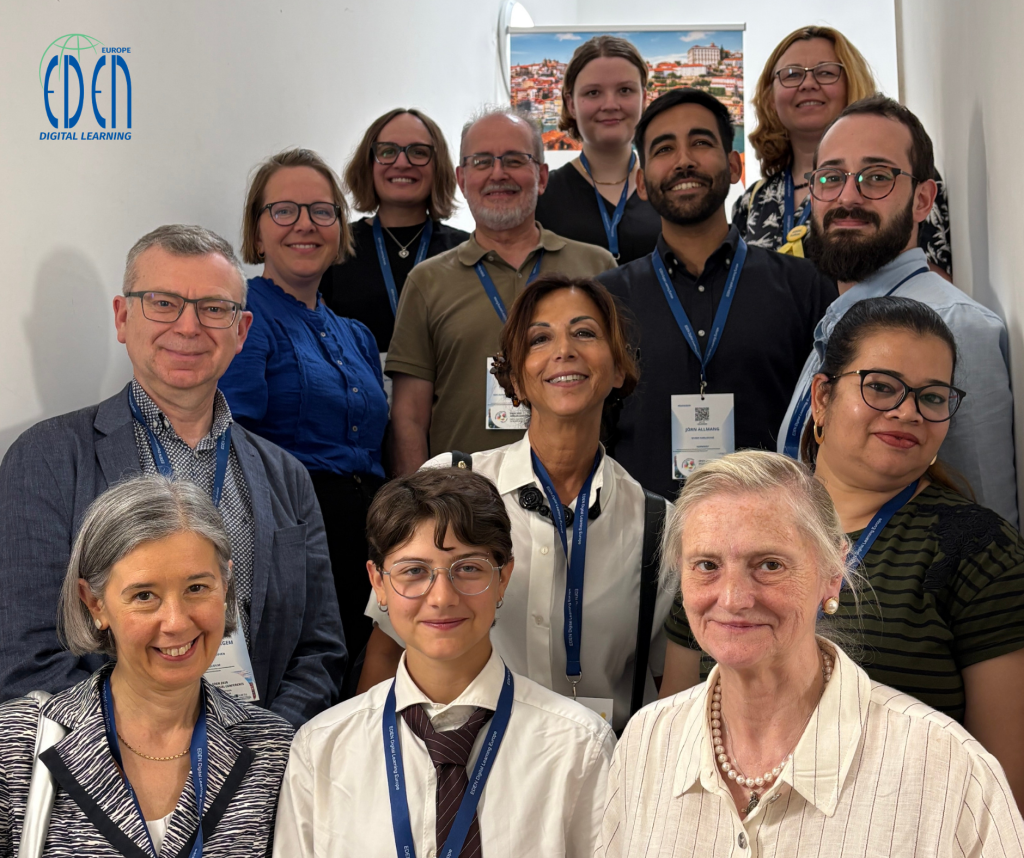
(PhD Students, panelists)
Welcome Reception and EDEN Community Recognition
On Sunday evening, conference participants gathered for the Welcome Reception, officially opening the conference social programme. The reception was enriched by a musical performance from “Looney Tuna,” a male vocal group from the Faculty of Psychology and Education Sciences of the University of Porto (FPCEUP). The evening opened with welcome addresses by Wim Van Petegem, President of EDEN Digital Learning Europe, and Sónia Valente Rodrigues, Pro-Rector for Pedagogical Innovation, Continuous Improvement and Promotion of the Portuguese Language at the University of Porto, who welcomed participants to an inspiring exchange on the future of digital education. A special moment of the evening was the presentation of EDEN Fellows and Senior Fellows Awards, recognising outstanding contributions to the EDEN community.
EDEN Fellow Awards 2026
• Carlo De Medio (University of Rome Tor Vergata, Italy)
• Ronan Bree (Dundalk Institute of Technology, Ireland)
EDEN Senior Fellow Award 2026
• Sally Reynolds (Media & Learning Association, Belgium)
Keynotes, Spotlight Sessions and the Future of Human–AI Collaboration
On Monday and Tuesday, EDEN Porto AC 2026 brought together leading voices from research, policy, higher education, and digital learning practice around one central question: How can we move beyond technology and build meaningful Human–AI Collaboration for Learning and Teaching? Across keynote and spotlight sessions, speakers explored how Artificial Intelligence is reshaping education — not only through new tools and technologies, but also through transformations in pedagogy, institutional development, assessment, inclusion, ethics, and the evolving roles of educators and learners.
Keynote Speakers
Luis Paulo Reis (University of Porto, Portugal)
“From Tools to Teammates: Agentic AI and the Future of Human–AI Collaboration in Education”
Luis Paulo Reis explored how AI can become an active partner in learning, supporting human creativity, learner agency, and personalised educational experiences.
Inge de Waard (InnoEnergy, Netherlands)
“The Quest for Our Own Humanity in Light of AI”
Inge de Waard reflected on preserving human values, ethical judgement, meaning-making, and the qualities that define human learning in an AI-driven world.
Spotlight Speakers
Francesca Maltauro (European Commission, Belgium)
Discussed European policies and initiatives supporting digital education, STEM development, and AI literacy.
Maxim Jean-Louis (Contact North | Contact Nord, Canada)
Explored the changing relationship between students and AI, raising important questions about trust, human connection, and the role AI may increasingly play in students’ lives. He challenged participants to reflect: What happens when students trust AI more than humans? What if a chatbot becomes the only place where a student feels understood? His reflections highlighted the need to rethink education in an era where AI is becoming part of students’ everyday experiences.
Anne Anthonissen (Turnitin)
Presented “Navigating the Future: Innovation and Integrity in the Age of AI,” focusing on academic integrity, assessment innovation, transparency, and responsible AI practices.
Cristina Díaz de la Cruz (Universidad Técnica Particular de Loja, Ecuador)
Explored “Human AI Collaboration in Higher Education: A Human-Centred Educational Model for the AI Era,”highlighting approaches for meaningful AI integration in higher education.
Colin Lowry (Higher Education Authority, Ireland)
Addressed institutional readiness for Generative AI in teaching and learning, including professional development, strategic responses, and innovation.
Together, the speakers highlighted a shared message: the future of education is not about choosing between humans and AI. It is about designing responsible, inclusive, and ethical partnerships where technology strengthens human potential, creativity, and connection.
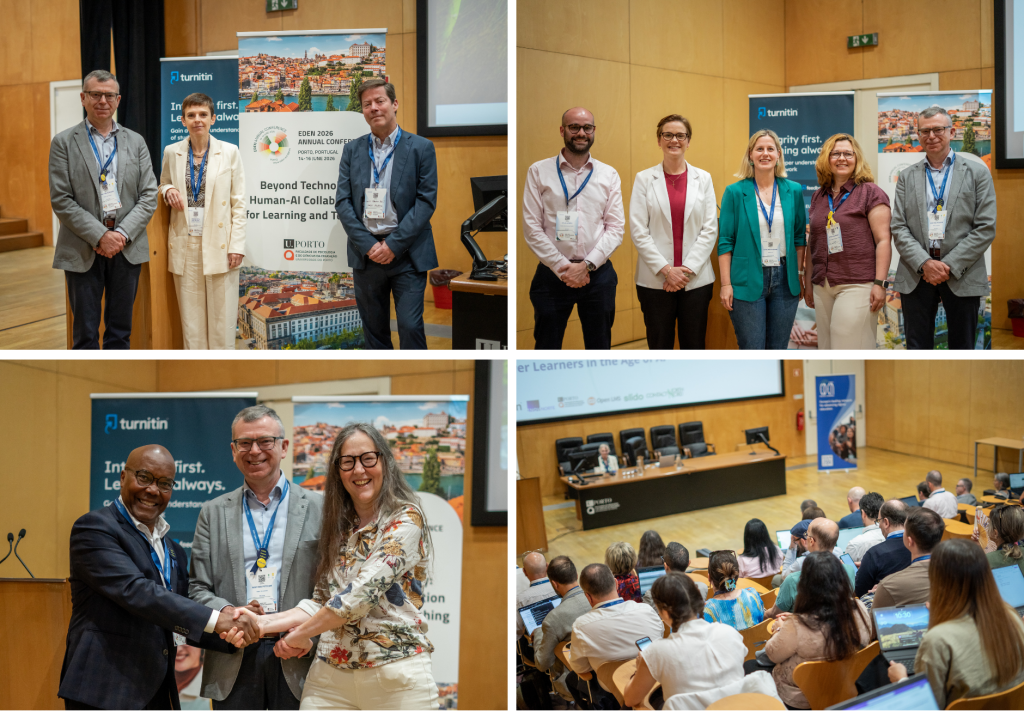
(EDEN Porto AC: EDEN DLE President, Panel Chairs, Keynote and Spotlight speakers )
The Great EDEN Panel: Human–AI Collaboration in Education
A major highlight of the conference was the Great EDEN Panel: “Human–AI Collaboration in Education: Bridging Policy, Innovation and Community.” Moderated by Albert Sangrà, EDEN DLE Vice President and Professor at Universitat Oberta de Catalunya, Spain, the panel brought together perspectives from policy, research, higher education, international organisations, and the EdTech sector.
Panel members:
- Francesca Maltauro, Head of Unit Digital Education, STEM & AI Literacy, DG Education, Youth, Sport and Culture, European Commission
- Anne Anthonissen, Team Lead Mainland Europe, Turnitin
- Maxim Jean-Louis, President and CEO of Contact North | Contact Nord, Canada
- Amélia Veiga, Professor and Vice-Dean, Faculty of Psychology and Education Sciences, University of Porto
- Torunn Gjelsvik, Secretary General, International Council for Open and Distance Education (ICDE)
- James O’Sullivan, Professor of Digital Culture & Cultural Analytics, University College Cork, Ireland
The discussion explored how the EDEN community can contribute to shaping a shared European and global vision for human–AI collaboration — moving beyond technological tools towards meaningful, ethical, and inclusive educational practices.
Gala Dinner, Networking and Recognition of Research Excellence
On Monday evening, conference participants gathered for the Gala Dinner aboard a boat on the Douro River. The evening offered a unique opportunity to connect, enjoy views of Porto from the river, experience the sunset, and share traditional Portuguese cuisine. During the Gala Dinner, the EDEN Digital Learning Europe Best Research Paper Award 2026 was announced recognizing outstanding research contributions in open, distance, and digital learning. The winning paper was:
“Before the First Prompt: Understanding Students’ Pre-Use Perceptions of an AI Digital Assistant in Higher Education” by Chris Edwards, Denise Whitelock, Felipe Maciel Tessarolo, Dr Duygu Bektik, Emily Coughlan, Christothea Herodotou and Thomas Ullmann from Institute of Educational Technology, The Open University, United Kingdom.
The Jury highlighted the paper’s timely contribution to understanding students’ perceptions of AI assistants in Higher Education, its strong mixed-methods approach, and its relevance to the EDEN 2026 theme of Human–AI Collaboration. The EDEN BRPA Jury included:
- Teresa Romeu, Associate Professor of Digital Education, UOC, Spain (Chair)
- Amélia Veiga, Associate Professor, University of Porto, Portugal
- Ilona Buchem, Professor for Media and Communication, Beuth University of Applied Sciences Berlin, Germany
Congratulations were extended to all finalists for their excellent research contributions and commitment to advancing digital education.
Closing Session and New EDEN Award for Innovation in Digital Education
Tuesday marked the final day of EDEN Porto AC 2026. Following the panel and parallel sessions, the conference concluded with a closing session reflecting on the key messages and achievements of the event. The closing session was chaired by Alfredo Soeiro, EDEN DLE Management Board member, University of Porto, Portugal.
The first EDEN Award for Innovation in Digital Education was presented at the EDEN Annual Conference Porto 2026. Introduced for the first time by EDEN Digital Learning Europe, the award recognises outstanding institutional achievements that advance digital learning through innovation, quality, inclusiveness, and evidence-informed practice. The inaugural award was presented to the Advanced Learning and Technology Lab, represented by Anat Cohen and Guy Cohen (Tel Aviv University), for their pioneering work in transforming Self-Regulated Learning (SRL) through technology-enhanced and AI-supported approaches.Their initiative demonstrates how AI can support human-centred learning by empowering learners and educators through personalised, inclusive, and evidence-based digital education practices.
The conference rapporteurs were:
- Vlad Mihaescu, EDEN DLE Management Board Member and Vice President, Politehnica University Timisoara, Romania
- Ronan Bree, EDEN DLE Management Board Member, Dundalk Institute of Technology, Ireland
- Antonella Poce, EDEN DLE Management Board Member and Chair of the PhD Community, University of Rome Tor Vergata, Italy
- Deborah Arnold, EDEN DLE, NTT DATA, Belgium
- Jan Petrus Bosman, PhD Student, KU Leuven, Belgium
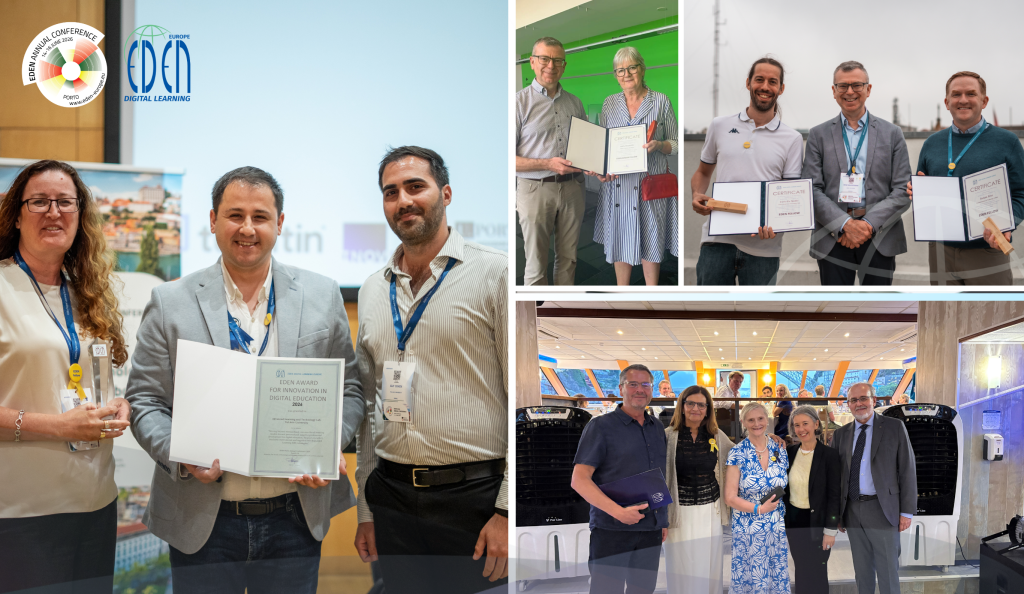
(EDEN Porto AC EDEN Award for Innovation in Digital Education; EDEN BRPA; EDEN Fellows and Senior Fellows Awards )
Looking Ahead
EDEN Porto AC 2026 demonstrated the strength of the international digital education community and its commitment to shaping a future where technology and humanity work together. Through research exchange, policy dialogue, innovation, and collaboration, the conference reaffirmed a shared vision: the future of learning will be built not only with advanced technologies, but with human values, creativity, responsibility, and meaningful collaboration at its centre.